
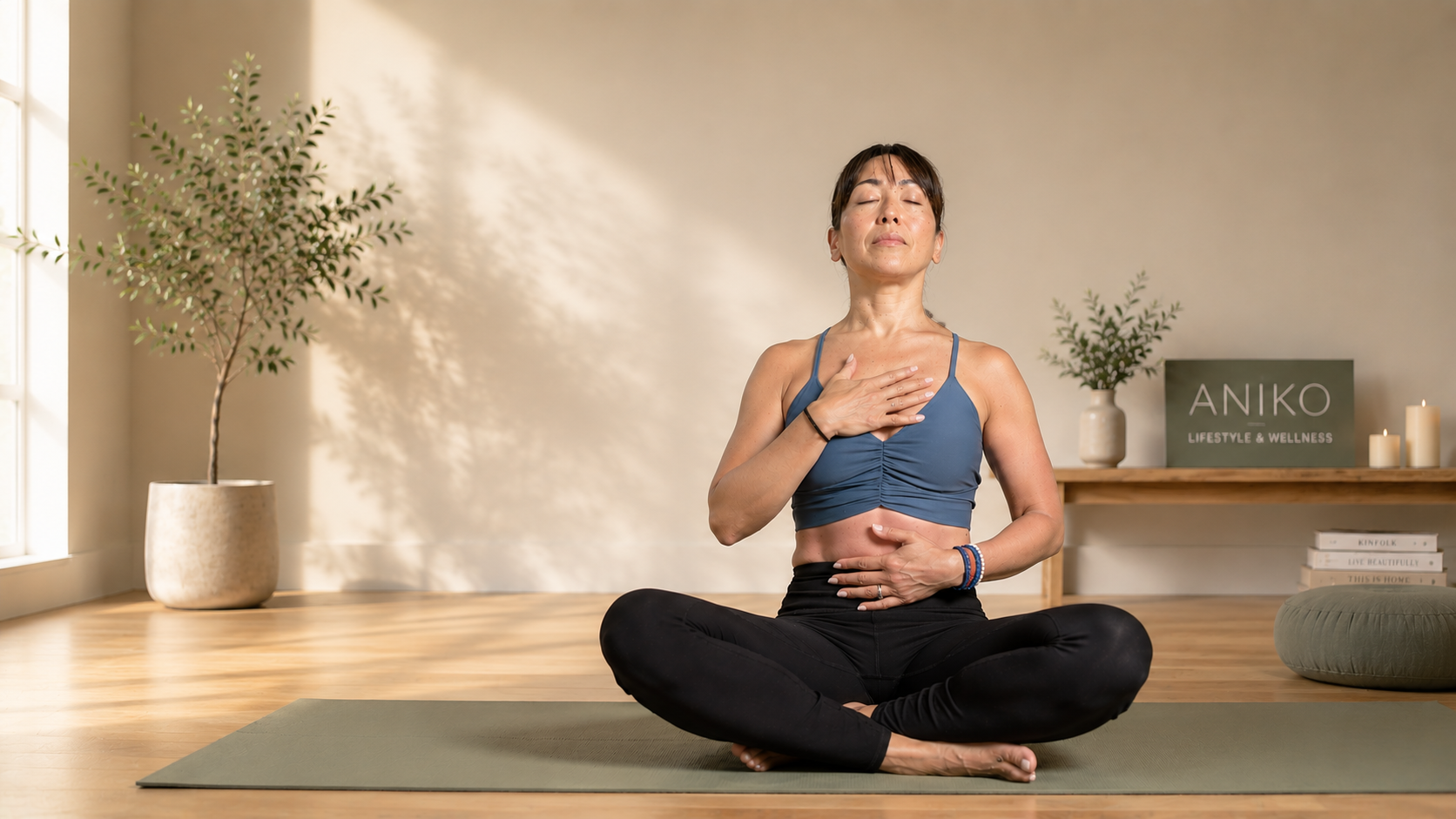
Chronic asthma can limit daily activity and quality of life. Evidence suggests that yoga can improve respiratory function, reduce symptoms, and promote relaxation (Yang, 2016; Santino et al., 2020). This 15-minute sequence combines breathwork and gentle poses that may help to support lung capacity and overall well-being. Duration: 15 minutesGoal: Support airway openness, reduce stress, and enhance breath awareness 1. Grounding & Breath Awareness – 2 minutes Seated comfortably, gently close your eyes. Observe natural breath; inhale through the nose, exhale slowly through the mouth. Begin Dirga Pranayama (three-part breath): inhale expanding belly → ribs → chest; exhale chest → ribs → belly.Evidence: Shown to improve tidal volume and relaxation response (Indian Journal of Physiology & Pharmacology, 2017). Move through gentle spinal flexion/extension to increase lung space. Inhale Cow Pose: gaze lifts, spine and belly reaches for the mat (extension of spine). Exhale Cat Pose: gaze drops, round the upper back, belly button reaches for the spine (flexion of spine).Evidence: Improves thoracic mobility, aiding respiratory function (International Journal of Yoga, 2018). 2.Supported Cobra (Bhujangasana Variation) – 3 minutes Lie prone, hands under shoulders, gently lift chest; avoid over-extension.Evidence: Encourages chest expansion, respiratory muscle engagement (Journal of Bodywork & Movement Therapies, 2020). 3. Bridge Pose (Setu Bandhasana) – 3 minutes Strengthens diaphragm and promotes deep inhalation.Evidence: Enhances pulmonary endurance and circulation (Complementary Therapies in Medicine, 2019). Lie back, use bolster or pillow; practice Equal Ratio Breathing (Sama Vritti) — inhale 4 counts, exhale 4 counts.Evidence: Lowers stress markers and heart rate variability improvement (Frontiers in Human Neuroscience, 2022). Evidence-Based Benefits of Yoga for Asthma Improved lung function Yoga breathing practices (pranayama) may enhance forced vital capacity and overall lung efficiency. Supported by studies, e.g., Cochrane Review, 2016. Reduced stress and anxiety Activates the parasympathetic nervous system, our body’s fight or flight response, helping calm the body. Can reduce anxiety-triggered asthma symptoms. Source: Frontiers in Psychology, 2021. Better symptom control Participants in yoga-based pulmonary rehabilitation report: Decreased shortness of breath Improved quality of life Source: Journal of Alternative and Complementary Medicine, 2019. Ongoing Management & Lifestyle Integration: Yoga can be a supportive complement to your existing asthma care plan under the guidance of your healthcare provider. Many find practicing breath-centered yoga a few times a week supports relaxation and overall well-being. Journaling may help you reflect on changes in how you feel over time. Before starting any new wellness routine, it’s wise to check in with your healthcare professional for guidance that fits your needs. Interested in learning more? Escape the chaos and tune into yourself with calming guided sessions Continue Your Wellness Journey Ready to take the next step toward better breathing and overall wellness? At ANIKO Lifestyle & Wellness, we offer personalized wellness consultations and evidence-informed yoga guidance designed to complement your healthcare plan. You may also enjoy: Breathwork Basics for Inner Peace Gentle Yoga for Chronic Back Pain Yoga for Carpal Tunnel Syndrome Interested in working together? Schedule a consultation to explore how mindful movement, breathing techniques, and lifestyle practices can support your wellness goals. Terms of Use References Cramer, H., Posadzki, P., Dobos, G., & Langhorst, J. (2016). Yoga for asthma. Cochrane Database of Systematic Reviews, 2016(2), CD010346. Gupta, M., Agarwal, D., & Tiwari, S. (2017). Effect of yoga on pulmonary function tests in patients with asthma. Indian Journal of Physiology and Pharmacology, 61(4), 376–380. Link Kauts, A., & Sharma, R. (2018). Effect of yoga on pulmonary functions in patients with asthma. International Journal of Yoga, 11(1), 52–56. Link Telles, S., & Singh, N. (2020). Impact of yoga breathing and relaxation as an add-on therapy for asthma. Journal of Bodywork and Movement Therapies, 24(4), 1–7. Link Sharma, R., & Sharma, S. (2021). Neural correlates of breath work, mental imagery of yoga postures, and meditation in yoga practitioners: A functional near-infrared spectroscopy study. Frontiers in Psychology, 12, 1–10. Link Zhang, Y., & Wang, L. (2022). Neural correlates of breath work, mental imagery of yoga postures, and meditation in yoga practitioners: A functional near-infrared spectroscopy study. Frontiers in Human Neuroscience, 16, 1–10. Link
Yoga for Chronic Back Pain: Evidence-Based Gentle Sequence | ANIKO
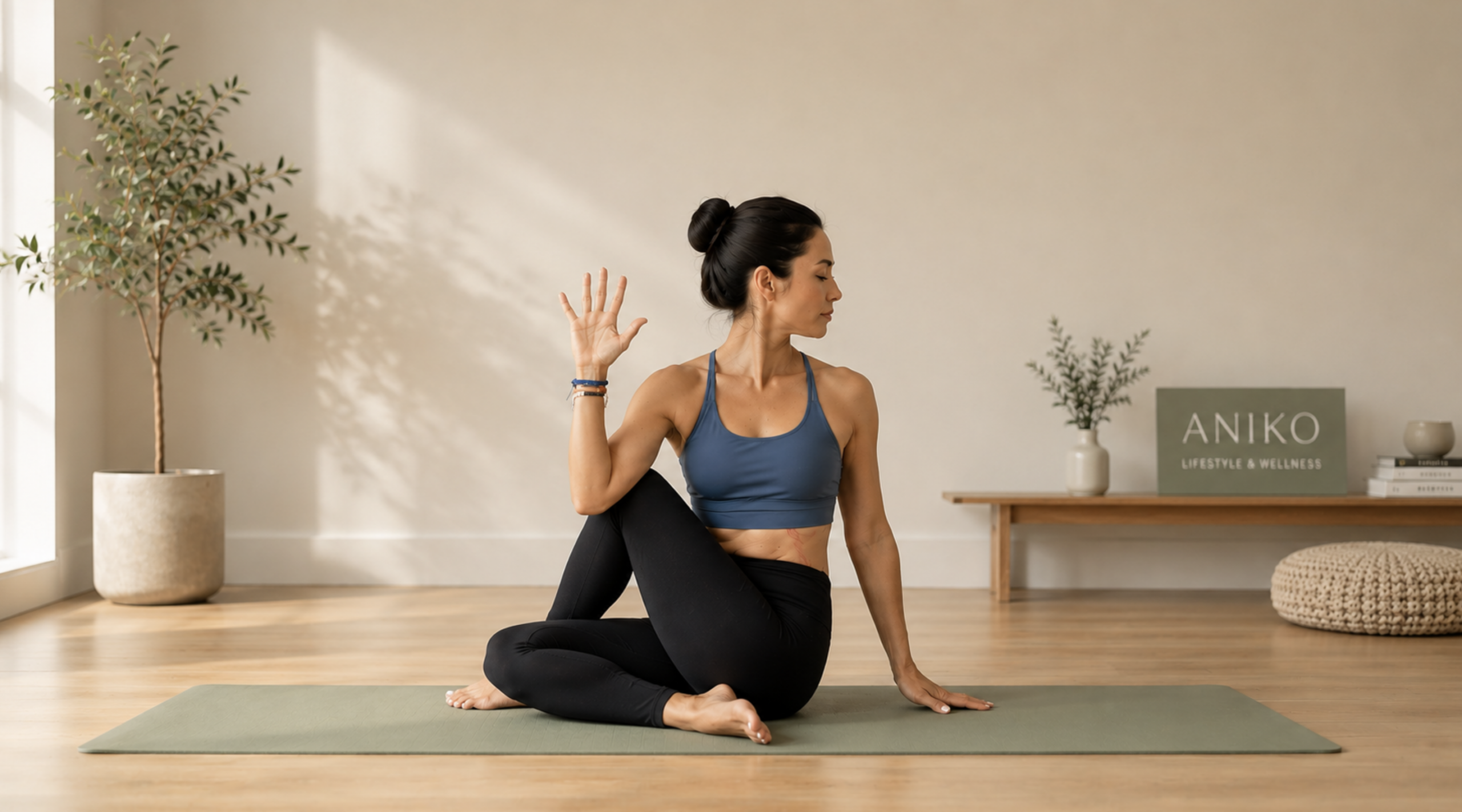
Understanding Chronic Back Pain Back pain affects millions of adults each year. According to the Centers for Disease Control and Prevention (CDC, 2021), nearly 39% of adults in the United States report experiencing back pain within a three-month period. Furthermore, chronic back pain remains one of the leading causes of disability and is frequently associated with prolonged sitting, poor posture, reduced mobility, muscle weakness, or muscular imbalance. Why Gentle Yoga Matters Fortunately, research continues to support yoga as a safe and effective complementary practice for many individuals living with chronic back pain. Specifically, gentle yoga may increase flexibility, improve core stability, reduce muscular tension, and promote mindful movement while decreasing stress (Cramer et al., 2013; Sherman et al., 2017; NCCIH, 2020). Consequently, regular practice may improve functional movement, reduce discomfort, and enhance overall well-being. Practice Overview Duration: 15 minutesGoal: Promote mobility, core support, and relaxation for individuals experiencing chronic back pain. Before you begin: move slowly and stop if pain increases. Most importantly, listen to your body throughout the practice. 1. Centering Breath & Gentle Seated Warm-Up — 1 minute Begin in a comfortable seat. Close your eyes and take 3–5 slow, deep breaths. Roll shoulders back and down, lengthen your spine, and invite softness into your body. Focus on releasing tension with each exhale.Evidence: This brief grounding moment prepares the nervous system for mindful movement, reducing muscle tension (NCCIH, 2020). 2. Child’s Pose (Balasana) — 2 minutes Next, from a kneeling position, bring your big toes to touch and knees wide. Walk your hands forward and rest your forehead on the mat. Take slow breaths into the lower back and ribs. Allow your hips to sink toward the heels.Evidence: Gentle flexion postures like Child’s Pose may relieve lumbar pressure and enhance spinal relaxation (Cramer et al., 2013). 3. Cat–Cow Stretch (Marjaryasana–Bitilasana) — 2 minutes Move to hands and knees, wrists under shoulders and knees under hips (tabletop) Inhale: Drop your belly, lift your heart and tailbone (Cow). Exhale: Round your spine and tuck your chin (Cat). Continue flowing with your breath for 8–10 rounds.Evidence: Dynamic spinal movement improves flexibility and circulation to paraspinal muscles, potentially easing stiffness (Sherman et al., 2017). 4. Sphinx Pose (Salamba Bhujangasana) — 2 minutes Lie on your stomach with elbows under shoulders, forearms pressing gently into the mat. Lift your chest gently lengthen through the crown of your head avoiding compression of the lower back. Keep shoulders and legs relaxed, breathing evenly, gaze forward. Engage your abdominal muscles slightly for support.Evidence: Low-intensity backbends such as Sphinx can strengthen spinal extensors and reduce chronic low back discomfort (Cramer et al., 2013). 5. Bridge Pose (Setu Bandhasana) — 2 minutes Lie on your back, knees bent, feet hip-width apart. Press your feet into the mat and lift your hips up slowly. Hold for 5–8 breaths, then lower down with control.. Repeat 2–3 times.Evidence: Gentle core and glute engagement in Bridge Pose enhances lumbar stability and functional support (Tilbrook et al., 2011). 6. Supine Twist (Supta Matsyendrasana) — 2 minutes Lie on your back, hug your knees into your chest, then drop them gently to one side. Extend your opposite arm and gaze in the other direction. Hold for 1 minute per side, breathing deeply into the side body. Switch sides. Evidence: Gentle spinal rotations improve mobility, decrease muscular tension, and aid parasympathetic activation (NCCIH, 2020). 7. Legs Up the Wall (Viparita Karani) — 2 minutes Sit close to a wall, lie back, and extend your legs upward. Allow your arms to rest open by your sides. Focus on slow, rhythmic breathing. Close your eyes. Stay for 2 minutes or longer. Evidence: Restorative inversions may promote circulation, reduce back strain, and calm the nervous system (NCCIH, 2020). 8. Savasana (Final Rest) — 2 minutes Lie flat on your back, arms relaxed, palms facing up. Soften your face and shoulders, releasing any remaining tension. Focus on the natural rhythm of your breath Evidence: Final relaxation integrates the physical and mental effects of yoga, enhancing overall pain coping mechanisms (Sherman et al., 2017). Breathwork Throughout Practice: Dirgha Pranayama Throughout the sequence, use three-part breathing (Dirgha Pranayama) — inhaling into the belly, ribs, and chest, and exhaling fully. Likewise, breathing exercises may reduce stress and improve body awareness. Practice this during transitions or rest to deepen body awareness and calm the mind. Evidence: Slow, rhythmic breathwork supports pain regulation by down-regulating the sympathetic nervous system (NCCIH, 2020). Evidence-Based Benefits of Yoga for Back Pain Reduces Chronic Low Back Pain Intensity Regular yoga practice has been shown to significantly reduce pain intensity and frequency in individuals with chronic low back pain. Cramer et al. (2013) found in a meta-analysis of 10 RCTs that yoga participants experienced moderate reductions in pain compared to usual care. Improves Physical Function and Mobility In addition, yoga may help to enhance flexibility, balance, and functional movement — supporting daily activity with less discomfort. Sherman et al. (2017) reported that yoga participants showed greater improvement in back function than those receiving standard education-only care. Supports Stress Reduction and Nervous System Regulation Breath-centered and mindfulness-based yoga practices help calm the sympathetic nervous system, reducing muscle tension and stress-related pain triggers. Source: Wieland et al. (2017) highlighted that yoga’s mindfulness and relaxation components can ease stress, a major contributor to chronic pain. Enhances Mind-Body Awareness Yoga cultivates self-awareness and encourages mindful movement, helping individuals recognize and adjust habits that contribute to back discomfort. Tilbrook et al. (2011) found that participants practicing yoga reported improved body awareness and confidence in managing their condition. Reduces Disability and Improves Quality of Life Those who incorporate yoga as part of a wellness routine often report enhanced daily function, mood, and overall well-being. Studies show that yoga can lead to measurable improvements in functional disability scores and emotional well-being in chronic back pain populations, (Büssing, et al. (2012). May Decrease
Carpal Tunnel Syndrome (CTS): Evidence-Based Practice and Yoga to Promote Symptom Relief
Understanding Carpal Tunnel Syndrome (CTS) What happens in the body Carpal Tunnel Syndrome (CTS) occurs when the Median Nerve (which runs from the forearm into the palm) becomes compressed as it travels through the narrow “carpal tunnel” in the wrist. As a result, individuals may experience numbness, tingling, or weakness in the hand and wrist. Mayo Clinic+2MSD Manuals+2 The carpal tunnel is a rigid space formed by wrist bones and the flexor retinaculum (a ligament-roof) and contains the median nerve plus nine flexor tendons. Elevation of pressure or swelling in this tunnel can impact the nerve. SpringerLink+1 Mechanisms include increased tunnel pressure, tendon swelling, ischemia of the nerve, mechanical trauma, and impaired nerve gliding — all contributing to tingling, numbness, pain, or weakness in the thumb/index/middle-fingers area. Neuroquantology Common risk-factors: repetitive hand/wrist use, wrist anatomy variations, female gender, diabetes, rheumatoid arthritis, obesity, pregnancy. Cleveland Clinic+1 Before beginning your practice: Move gently. Avoid movements that increase pain or numbness. Stop if symptoms worsen. Consult a healthcare professional if symptoms are severe. Duration: 13-15 minutesGoal: Gentle stretches support nerve-glide awareness, non-weight-bearing wrist positions help decompress the median nerve and encourage healthy tissue movement. (Note: These suggestions are educational in nature. Do not interpret them as medical advice. Always proceed gently, and stop any pose that causes pain, tingling, or worsening symptoms). 1. Wrist Circles – 1 minute To begin, sit comfortably with your spine tall and your shoulders relaxed. Extend arms in front with palms down. Next, gently rotate both wrists in slow circles while maintaining smooth, relaxed breathing, clockwise for 30 seconds, then counter-clockwise for 30 seconds. Focus on gentle awareness of wrist movement. Evidence: Encourages blood flow and joint mobility around the carpal tunnel region, (Mayo Clinic, 2024). 2. Prayer/Reverse Prayer Wrist Stretch – 2 minutes Bring palms together in front of the chest where the sternum lies. Then slowly lower hands toward waist until you feel a gentle stretch in the wrists and forearms. Hold the stretch only to a comfortable point without forcing the movement. Hold ~30 seconds. Flip hands so backs touch (“reverse prayer”) and hold ~30 seconds. Repeat once. Evidence: Shown to gently elongate wrist flexor and extensor tendons, promoting space within the carpal tunnel, (Kerwin, Williams, & Seiler, 1996; Yoga Journal, 2025). 3. Finger and Thumb Spreads / Wrist Extension Support – 1 minute Extend one arm, palm facing down, gently use other hand to lift the fingers and thumb upward (wrist extension) hold ~15 seconds, slightly bend fingers (wrist flexion) ~15 seconds. Switch sides. Repeat. Evidence: Supports tendon mobility and median nerve gliding, (Aboonq, 2015). 4. Table Top with ‘Fists to Flat’ Variation – 2 minutes Come to hands and knees (wrist directly under shoulder). Make gentle fists with both hands, then open fingers wide and flatten palms. Repeat this “fist→flat” motion ~6–8 times slowly. Evidence: Mobilizes hand/wrist/forearm in a controlled, supported position — avoids deep extension that may aggravate CTS, (Yoga International, 2024). 5. Eagle Arms / Forearm Focus (bird-dog variation) – 2 minutes From hands/knees, cross right forearm under left and wrap if comfortable (eagle arms) while keeping wrists supported on mat. Hold ~1 minute. Switch sides for 1 minute. Evidence: Focuses on upper limb tension release and may decrease shoulder/forearm strain that influences wrist load, (Garfinkel et al., 1998). 6. Supported Dolphin/Forearm Plank – Hold ~30 seconds With forearms on mat, hold forearm plank for ~30 seconds (or shorter if wrists sensitive). Focus on neutral wrist, strong forearm engagement, and core awareness. Evidence: Strengthens supportive musculature of shoulders and arms to decrease distal wrist stress, (Garfinkel et al., 1998; Aboonq, 2015). 7. Final Rest with Gentle Wrist Stretch (Savasana) – 1 minute Lie on back or sit comfortably. Extend arms overhead, palms facing each other. Let wrists relax, maybe gently shake out the hands, rest arms along side body, close eyes for 30 seconds. Evidence: Mindful relaxation helps calm the sympathetic nervous system and reduces tension, (Yoga International, 2024). Ongoing Support Strategies Ergonomic aids: keyboard/mouse wrist support, keep wrists neutral during typing/phone use. Frequent micro-breaks during repetitive hand/wrist tasks (every 20–30 minutes). Maintain overall upper-body/postural health (core, shoulders, neck) to minimize wrist load. Incorporate daily gentle wrist/forearm mobility (as above) and 3–4 times/week mindful hand/wrist yoga. If symptoms persist or worsen (especially night tingling/weakness), consult qualified health provider for assessment. Interested in learning more? Escape the chaos and tune into yourself with calming guided sessions Continue Your Wellness Journey Ready to take the next step toward better breathing and overall wellness? At ANIKO Lifestyle & Wellness, we offer personalized wellness consultations and evidence-informed yoga guidance designed to complement your healthcare plan. You may also enjoy: Breathwork Basics for Inner Peace Gentle Yoga for Chronic Back Pain Interested in working together? Schedule a consultation to explore how mindful movement, breathing techniques, and lifestyle practices can support your wellness goals. Terms of Use Aboonq, M. S. (2015). The pathophysiology of carpal tunnel syndrome. Neurosciences Journal, 20(1), 4–9. Link Garfinkel, M. S., Singhal, A., Katz, W. A., Allan, D. A., Reshetar, R., & Schumacher, H. R. (1998). Yoga-based intervention for carpal tunnel syndrome: A randomized trial. JAMA, 280(11), 1601-1603. Link Kerwin, G., Williams, C. S., & Seiler, J. G. III. (1996). The pathophysiology of carpal tunnel syndrome. In Hand and Upper Extremity Rehabilitation: Theoretical and Evidence-Based Practice (pp. 21-35). Springer. Link Mayo Clinic. (2024). Carpal tunnel syndrome: Symptoms & causes. Link Yoga International. (2024). A yoga practice for carpal tunnel syndrome.Link Yoga Journal. (2025, January 20). The best yoga poses for carpal tunnel syndrome.Link
Diaphragmatic Breathing for Stress Relief | 10-Minute Practice
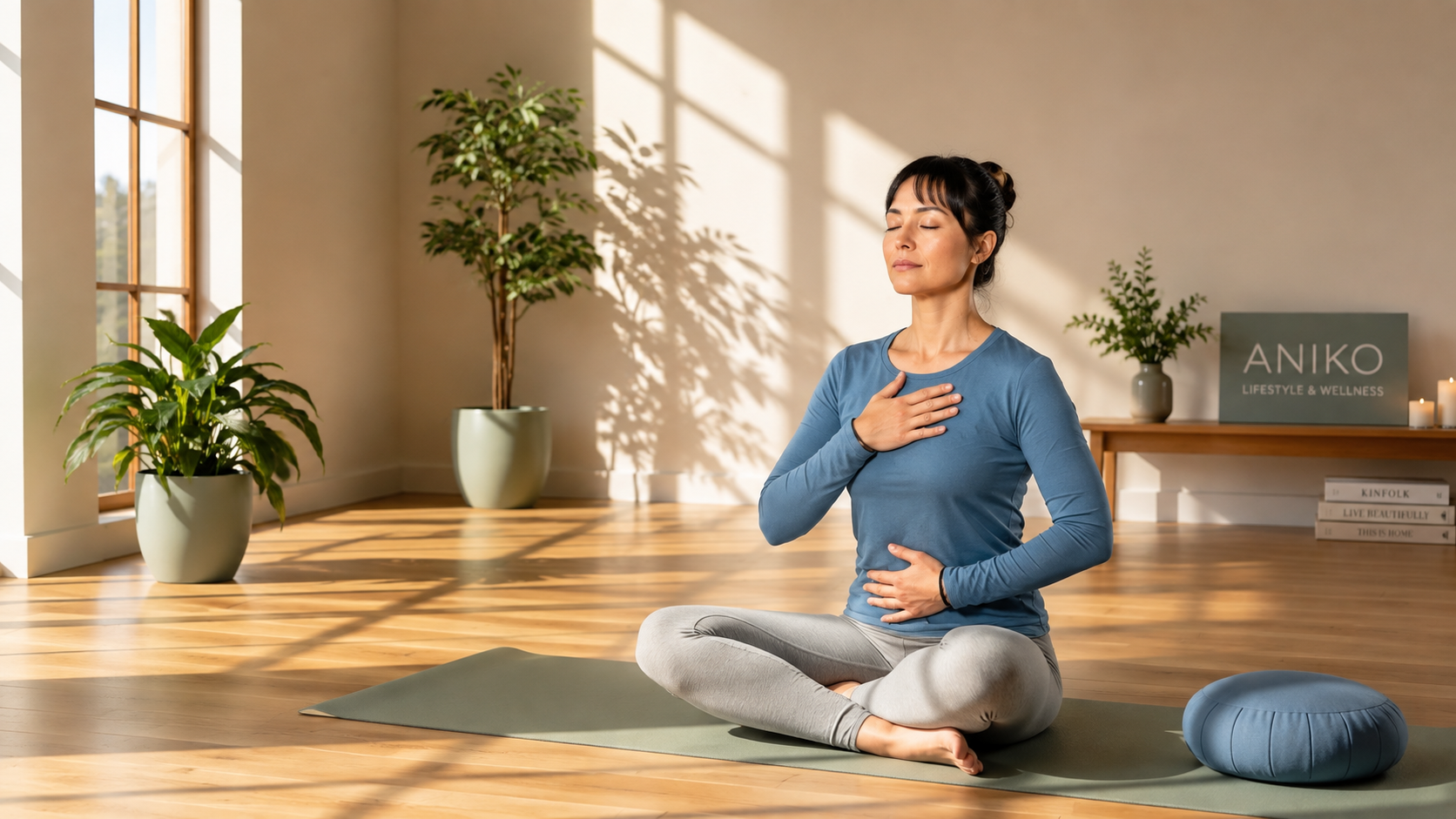
Stress can affect the way we breathe. During periods of tension, breathing may become faster, shallower, or concentrated in the upper chest. As a result, the body may remain in a heightened state of alertness even after the immediate stressor has passed. Diaphragmatic breathing, sometimes called belly breathing, encourages slower and more efficient breathing. In addition, it may support relaxation, improve breath awareness, and help reduce unnecessary tension in the shoulders, chest, and abdomen. This gentle practice is designed for general wellness and relaxation. It may complement, but does not replace, medical or mental-health care. What Is Diaphragmatic Breathing? The diaphragm is the primary muscle used for breathing. It sits beneath the lungs and moves downward during inhalation, allowing the lungs to expand. During diaphragmatic breathing, the abdomen gently rises as you inhale and softens as you exhale. In contrast, shallow chest breathing often causes more movement through the upper chest and shoulders. The goal is not to force the abdomen outward. Instead, allow the breath to move naturally and comfortably. How Diaphragmatic Breathing May Support Stress Relief Slow, controlled breathing may help the body shift toward a more relaxed state. For example, extending the exhalation can encourage a sense of calm and reduce the urge to breathe rapidly. Diaphragmatic breathing may also help: Reduce upper-body tension. Improve awareness of breathing patterns. Support relaxation before sleep. Create a pause during stressful moments. Improve focus during meditation or gentle movement. Individual responses vary. Some people feel calmer quickly, while others benefit from repeated practice over time. Duration: 10 minutesGoal: Promote relaxation, improve awareness of the body and mind. 10-Minute Diaphragmatic Breathing Practice 1. Settle Into a Comfortable Position — 1 Minute Sit upright or lie on your back with your knees supported. Place one hand over your upper chest and the other over your abdomen. First, allow your shoulders, jaw, and hands to soften. 2. Notice Your Natural Breath — 1 Minute Do not change your breathing immediately. Instead, observe where you feel the most movement. Notice whether the upper chest, ribs, or abdomen moves first. There is no need to judge the pattern. The purpose is simply to build awareness. 3. Encourage Gentle Abdominal Breathing — 2 Minutes Inhale slowly through your nose. Allow the lower hand to rise gently as the abdomen expands. Meanwhile, keep the upper chest relatively quiet. Exhale comfortably through your nose or softly through pursed lips. Repeat for several slow breaths. 4. Lengthen the Exhalation — 2 Minutes Continue breathing gently. Inhale for a comfortable count of three or four. Then, exhale for a slightly longer count of four or five. Avoid holding your breath or straining. If necessary, shorten the count until the pattern feels easy. 5. Add a Calming Phrase — 2 Minutes As you inhale, silently think: I am creating space. As you exhale, silently think: I am releasing tension. Alternatively, choose simple words such as “in” and “out” or “calm” and “soften.” 6. Return to Natural Breathing — 2 Minutes Release the counting and allow your breathing to return to its natural rhythm. Notice any changes in: Shoulder tension. Jaw tension. Heart rate. Mental focus. Overall ease. Lastly, open your eyes slowly and transition back into your day. Ways to Use This Practice Diaphragmatic breathing can be practiced at different times throughout the day: Before a Stressful Event: Use three to five slow breaths before a meeting, appointment, or difficult conversation. During a Work Break: Step away from the screen and practice for two minutes. As a result, you may return with greater focus and less physical tension. Before Sleep: Practice while lying down to support a calmer bedtime routine. With Gentle Yoga: Pair diaphragmatic breathing with restorative poses or slow stretching. In addition, coordinated breathing may improve body awareness during movement. Common Mistakes to Avoid Forcing the Breath: A deeper breath is not always a better breath. Allow the breath to remain smooth and comfortable. Lifting the Shoulders: Try to keep the shoulders relaxed rather than pulling them upward with each inhalation. Breathing Too Quickly: Slow the pace if possible. However, never prolong the breath to the point of discomfort. Expecting Immediate Results: Breath awareness is a skill. Therefore, short and consistent practice may be more helpful than occasional, prolonged sessions. When to Seek Professional Guidance Breathing exercises are not a substitute for medical evaluation. Seek medical care for: New or severe shortness of breath. Chest pain. Fainting. Blue lips or fingertips. Wheezing that is not improving. Symptoms associated with asthma, heart disease, or another medical condition. People with respiratory, cardiovascular, or panic-related conditions may benefit from individualized guidance before starting a structured breathwork practice. Moving Forward With Calm and Confidence Overall, diaphragmatic breathing is a simple and accessible practice that may support relaxation, body awareness, and healthier breathing patterns. Most importantly, the practice should feel gentle rather than forced. Begin with a few comfortable breaths and gradually build consistency. Even a brief daily pause can become a meaningful part of a broader wellness routine. Educational Disclaimer This article is for general educational purposes only. It is not intended to diagnose, treat, cure, or prevent any medical condition. Consult a qualified healthcare professional regarding persistent breathing symptoms, significant anxiety, or concerns about your health. Interested in learning more? Escape the chaos and tune into yourself with calming guided sessions Continue Your Wellness Journey Ready to take the next step toward better breathing and overall wellness? At ANIKO Lifestyle & Wellness, we offer personalized wellness consultations and evidence-informed yoga guidance designed to complement your healthcare plan. You may also enjoy: Breathwork Basics for Inner Peace Gentle Yoga for Chronic Back Pain Interested in working together? Schedule a consultation to explore how mindful movement, breathing techniques, and lifestyle practices can support your wellness goals. Terms of Use Bentley, T. G. K., D’Andrea-Penna, G., Rakic, M., Arce, N., LaFaille, M., Berman, R., Cooley, K.,