
Understanding Chronic Back Pain
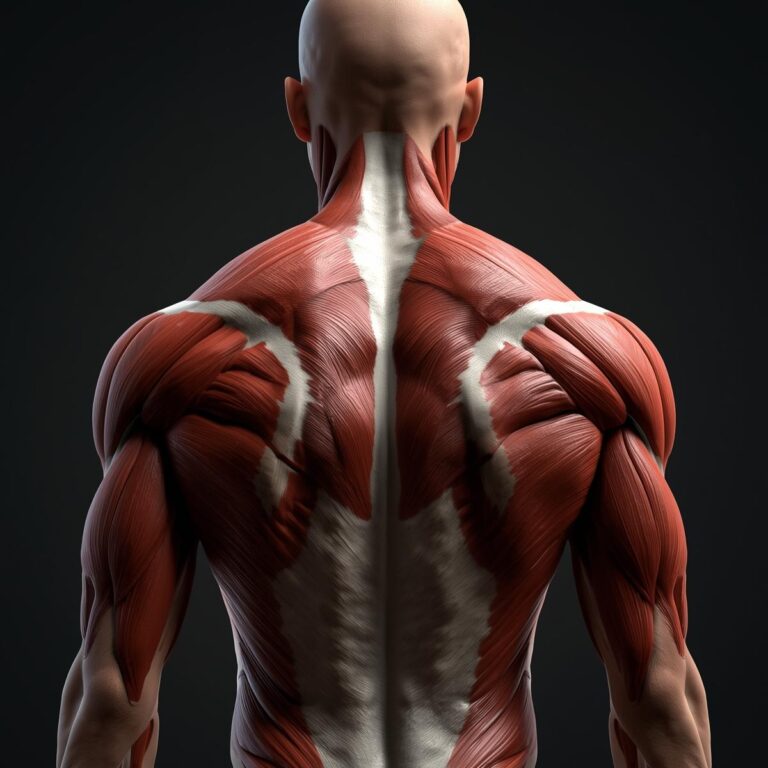
Back pain affects millions of adults each year. According to the Centers for Disease Control and Prevention (CDC, 2021), nearly 39% of adults in the United States report experiencing back pain within a three-month period.
Furthermore, chronic back pain remains one of the leading causes of disability and is frequently associated with prolonged sitting, poor posture, reduced mobility, muscle weakness, or muscular imbalance.
Why Gentle Yoga Matters
Fortunately, research continues to support yoga as a safe and effective complementary practice for many individuals living with chronic back pain. Specifically, gentle yoga may increase flexibility, improve core stability, reduce muscular tension, and promote mindful movement while decreasing stress (Cramer et al., 2013; Sherman et al., 2017; NCCIH, 2020). Consequently, regular practice may improve functional movement, reduce discomfort, and enhance overall well-being.
Practice Overview
Duration: 15 minutes
Goal: Promote mobility, core support, and relaxation for individuals experiencing chronic back pain.
Before you begin: move slowly and stop if pain increases. Most importantly, listen to your body throughout the practice.
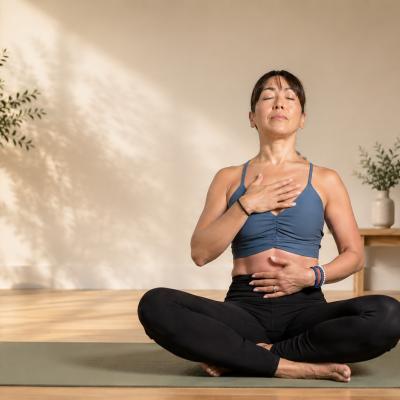
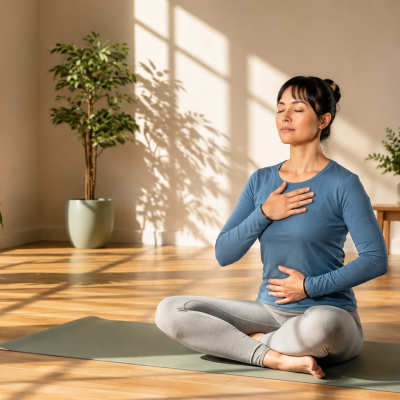
1. Centering Breath & Gentle Seated Warm-Up — 1 minute
- Begin in a comfortable seat.
- Close your eyes and take 3–5 slow, deep breaths.
- Roll shoulders back and down, lengthen your spine, and invite softness into your body.
- Focus on releasing tension with each exhale.
Evidence: This brief grounding moment prepares the nervous system for mindful movement, reducing muscle tension (NCCIH, 2020).
2. Child’s Pose (Balasana) — 2 minutes
- Next, from a kneeling position, bring your big toes to touch and knees wide.
- Walk your hands forward and rest your forehead on the mat.
- Take slow breaths into the lower back and ribs.
- Allow your hips to sink toward the heels.
Evidence: Gentle flexion postures like Child’s Pose may relieve lumbar pressure and enhance spinal relaxation (Cramer et al., 2013).
3. Cat–Cow Stretch (Marjaryasana–Bitilasana) — 2 minutes
- Move to hands and knees, wrists under shoulders and knees under hips (tabletop)
- Inhale: Drop your belly, lift your heart and tailbone (Cow).
- Exhale: Round your spine and tuck your chin (Cat).
- Continue flowing with your breath for 8–10 rounds.
Evidence: Dynamic spinal movement improves flexibility and circulation to paraspinal muscles, potentially easing stiffness (Sherman et al., 2017).
4. Sphinx Pose (Salamba Bhujangasana) — 2 minutes
- Lie on your stomach with elbows under shoulders, forearms pressing gently into the mat.
- Lift your chest gently lengthen through the crown of your head avoiding compression of the lower back.
- Keep shoulders and legs relaxed, breathing evenly, gaze forward.
- Engage your abdominal muscles slightly for support.
Evidence: Low-intensity backbends such as Sphinx can strengthen spinal extensors and reduce chronic low back discomfort (Cramer et al., 2013).
5. Bridge Pose (Setu Bandhasana) — 2 minutes
- Lie on your back, knees bent, feet hip-width apart.
- Press your feet into the mat and lift your hips up slowly.
- Hold for 5–8 breaths, then lower down with control.. Repeat 2–3 times.
Evidence: Gentle core and glute engagement in Bridge Pose enhances lumbar stability and functional support (Tilbrook et al., 2011).
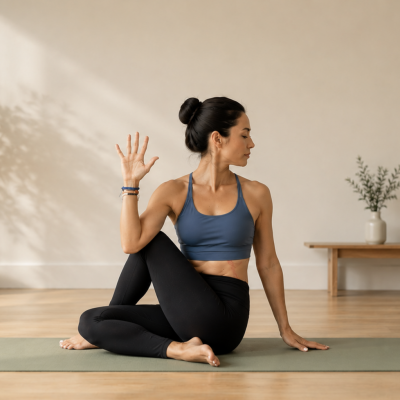
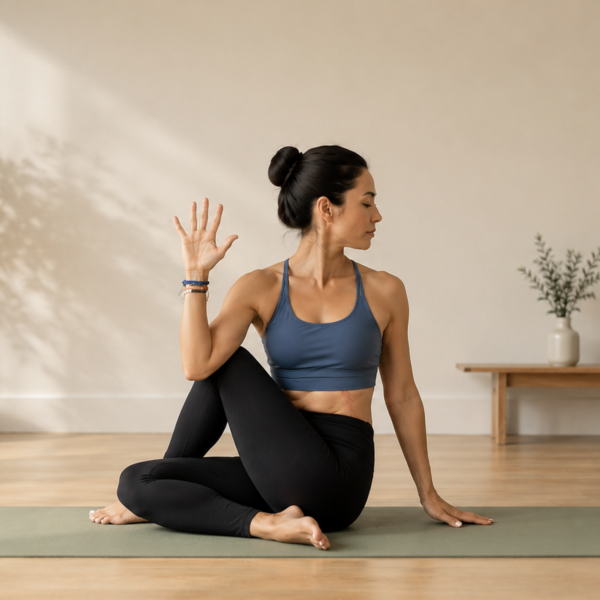
6. Supine Twist (Supta Matsyendrasana) — 2 minutes
- Lie on your back, hug your knees into your chest, then drop them gently to one side.
- Extend your opposite arm and gaze in the other direction.
- Hold for 1 minute per side, breathing deeply into the side body. Switch sides.
Evidence: Gentle spinal rotations improve mobility, decrease muscular tension, and aid parasympathetic activation (NCCIH, 2020).
7. Legs Up the Wall (Viparita Karani) — 2 minutes
- Sit close to a wall, lie back, and extend your legs upward.
- Allow your arms to rest open by your sides.
- Focus on slow, rhythmic breathing. Close your eyes.
- Stay for 2 minutes or longer.
Evidence: Restorative inversions may promote circulation, reduce back strain, and calm the nervous system (NCCIH, 2020).
8. Savasana (Final Rest) — 2 minutes
- Lie flat on your back, arms relaxed, palms facing up.
- Soften your face and shoulders, releasing any remaining tension.
- Focus on the natural rhythm of your breath
Evidence: Final relaxation integrates the physical and mental effects of yoga, enhancing overall pain coping mechanisms (Sherman et al., 2017).
Breathwork Throughout Practice: Dirgha Pranayama
- Throughout the sequence, use three-part breathing (Dirgha Pranayama) — inhaling into the belly, ribs, and chest, and exhaling fully.
- Likewise, breathing exercises may reduce stress and improve body awareness.
- Practice this during transitions or rest to deepen body awareness and calm the mind.
Evidence: Slow, rhythmic breathwork supports pain regulation by down-regulating the sympathetic nervous system (NCCIH, 2020).
Evidence-Based Benefits of Yoga for Back Pain
- Reduces Chronic Low Back Pain Intensity
- Regular yoga practice has been shown to significantly reduce pain intensity and frequency in individuals with chronic low back pain.
- Cramer et al. (2013) found in a meta-analysis of 10 RCTs that yoga participants experienced moderate reductions in pain compared to usual care.
- Improves Physical Function and Mobility
- In addition, yoga may help to enhance flexibility, balance, and functional movement — supporting daily activity with less discomfort.
- Sherman et al. (2017) reported that yoga participants showed greater improvement in back function than those receiving standard education-only care.
- Supports Stress Reduction and Nervous System Regulation
- Breath-centered and mindfulness-based yoga practices help calm the sympathetic nervous system, reducing muscle tension and stress-related pain triggers.
- Source: Wieland et al. (2017) highlighted that yoga’s mindfulness and relaxation components can ease stress, a major contributor to chronic pain.
- Enhances Mind-Body Awareness
- Yoga cultivates self-awareness and encourages mindful movement, helping individuals recognize and adjust habits that contribute to back discomfort.
- Tilbrook et al. (2011) found that participants practicing yoga reported improved body awareness and confidence in managing their condition.
- Reduces Disability and Improves Quality of Life
- Those who incorporate yoga as part of a wellness routine often report enhanced daily function, mood, and overall well-being.
- Studies show that yoga can lead to measurable improvements in functional disability scores and emotional well-being in chronic back pain populations, (Büssing, et al. (2012).
- May Decrease Reliance on Pain Medication
- Participants in yoga-based programs report reduced use of analgesic medications over time as they experience greater self-efficacy and pain control.
- The NCCIH (2020) notes that yoga can complement standard care by improving pain management and reducing the need for medication in some cases.
- Promotes Emotional Resilience and Relaxation
- Yoga’s meditative and breathwork components have been shown to lower anxiety, depression, and fatigue often associated with chronic pain.
- A review in Frontiers in Psychology (2021) found yoga supports mental well-being by improving mood regulation and resilience.
Move with Intention
Gentle activity — gentle movement, including walking, light stretching, and yoga — may help improve flexibility, reduce stiffness, and support spinal mobility. Furthermore, regular movement has been shown to decrease discomfort associated with prolonged inactivity (NCCIH, 2020; Sherman et al., 2017).
Breathe and Unwind
Mindful breathing, meditation, and gentle yoga may help calm the nervous system and reduce stress, which can influence how pain is experienced. In addition, relaxation practices promote body awareness and support overall well-being (NCCIH, 2020; Wieland et al., 2017).
When to Seek Professional Guidance
If pain persists or movement feels uncomfortable, working with a qualified healthcare provider or experienced yoga instructor may help improve confidence, alignment, and function. Research suggests guided yoga programs can improve pain and quality of life for many individuals living with chronic back pain, (Tilbrook et al., 2011; Sherman et al., 2017).
Continue Your Wellness Journey
Ready to take the next step toward better breathing and overall wellness?
At ANIKO Lifestyle & Wellness, we offer personalized wellness consultations and evidence-informed yoga guidance designed to complement your healthcare plan.
You may also enjoy:
- Breathwork Basics for Inner Peace
- Gentle Yoga for Chronic Back Pain
- Yoga for Carpal Tunnel Syndrome
Interested in working together?
Schedule a consultation to explore how mindful movement, breathing techniques, and lifestyle practices can support your wellness goals.
- American Chiropractic Association. (2022). Back pain facts and statistics.Link
- Büssing, A., Ostermann, T., Lüdtke, R., & Michalsen, A. (2012). Effects of yoga interventions on pain and pain-associated disability: A meta-analysis. The Journal of Pain, 13(1), 1–9. Link
- Centers for Disease Control and Prevention. (2021). Back, lower limb, and upper limb pain among U.S. adults, 2019 (Data Brief No. 415). Link
- Cramer, H., Lauche, R., Haller, H., et al. (2013). Yoga for chronic low back pain: A meta-analysis of randomized clinical trials. The Clinical Journal of Pain, 29(5), 450–460. Link
- National Center for Complementary and Integrative Health. (2020). Yoga for health.Link
- Sharma, R., et al. (2021). Yoga-based interventions for psychological and physical well-being: A meta-analysis. Frontiers in Psychology, 12, 789. Link
- Sherman, K. J., et al. (2017). Yoga for chronic low back pain: A randomized trial. Annals of Internal Medicine, 165(7), 485–494. Link
- Tilbrook, H. E., et al. (2011). Yoga for chronic low back pain: A randomized trial. Annals of Internal Medicine, 155(9), 569–578. Link
- Wieland, L. S., Skoetz, N., Pilkington, K., Vempati, R., D’Adamo, C. R., & Berman, B. M. (2017). Yoga treatment for chronic non-specific low back pain. Cochrane Database of Systematic Reviews, 2017(1), CD010671. Link