Stress can affect the way we breathe. During periods of tension, breathing may become faster, shallower, or concentrated in the upper chest. As a result, the body may remain in a heightened state of alertness even after the immediate stressor has passed.
Diaphragmatic breathing, sometimes called belly breathing, encourages slower and more efficient breathing. In addition, it may support relaxation, improve breath awareness, and help reduce unnecessary tension in the shoulders, chest, and abdomen.
This gentle practice is designed for general wellness and relaxation. It may complement, but does not replace, medical or mental-health care.
What Is Diaphragmatic Breathing?
The diaphragm is the primary muscle used for breathing. It sits beneath the lungs and moves downward during inhalation, allowing the lungs to expand.
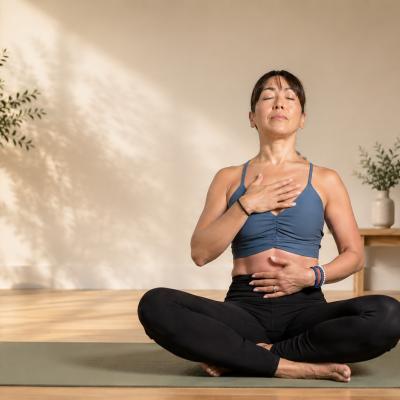
During diaphragmatic breathing, the abdomen gently rises as you inhale and softens as you exhale. In contrast, shallow chest breathing often causes more movement through the upper chest and shoulders.
The goal is not to force the abdomen outward. Instead, allow the breath to move naturally and comfortably.
How Diaphragmatic Breathing May Support Stress Relief
Slow, controlled breathing may help the body shift toward a more relaxed state.
For example, extending the exhalation can encourage a sense of calm and reduce the urge to breathe rapidly.
Diaphragmatic breathing may also help:
- Reduce upper-body tension.
- Improve awareness of breathing patterns.
- Support relaxation before sleep.
- Create a pause during stressful moments.
- Improve focus during meditation or gentle movement.
Individual responses vary. Some people feel calmer quickly, while others benefit from repeated practice over time.
Duration: 10 minutes
Goal: Promote relaxation, improve awareness of the body and mind.
10-Minute Diaphragmatic Breathing Practice
1. Settle Into a Comfortable Position — 1 Minute
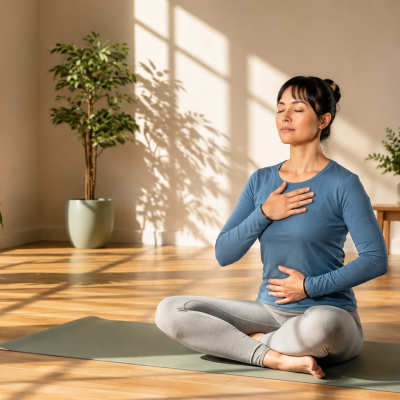
- Sit upright or lie on your back with your knees supported.
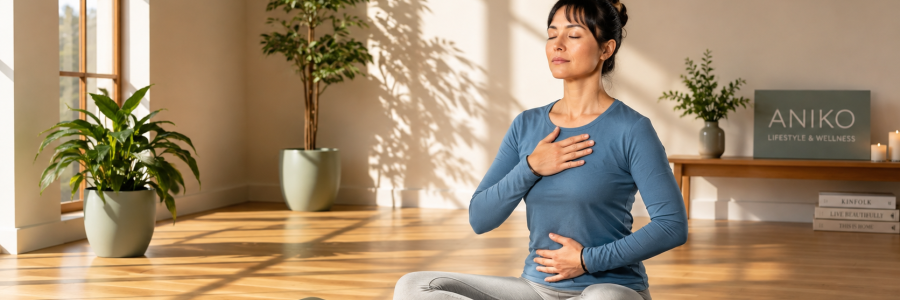
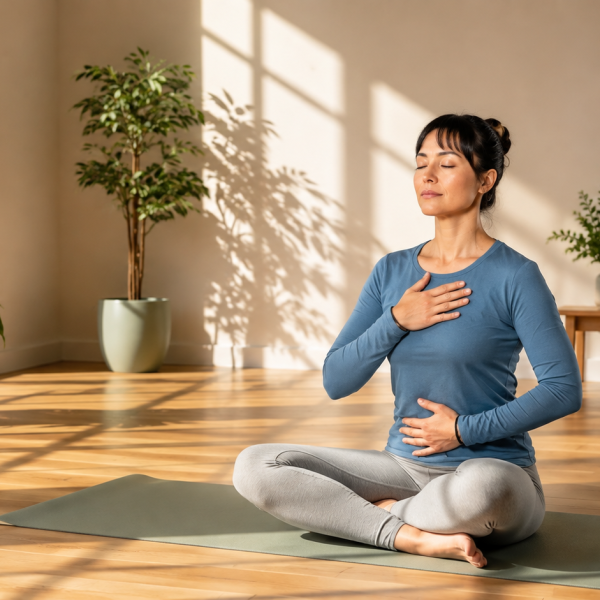
- Place one hand over your upper chest and the other over your abdomen.
- First, allow your shoulders, jaw, and hands to soften.
2. Notice Your Natural Breath — 1 Minute
- Do not change your breathing immediately.
- Instead, observe where you feel the most movement. Notice whether the upper chest, ribs, or abdomen moves first.
- There is no need to judge the pattern. The purpose is simply to build awareness.
3. Encourage Gentle Abdominal Breathing — 2 Minutes
- Inhale slowly through your nose.
- Allow the lower hand to rise gently as the abdomen expands. Meanwhile, keep the upper chest relatively quiet.
- Exhale comfortably through your nose or softly through pursed lips.
- Repeat for several slow breaths.
4. Lengthen the Exhalation — 2 Minutes
- Continue breathing gently.
- Inhale for a comfortable count of three or four. Then, exhale for a slightly longer count of four or five.
- Avoid holding your breath or straining.
- If necessary, shorten the count until the pattern feels easy.
5. Add a Calming Phrase — 2 Minutes
As you inhale, silently think:
I am creating space.
As you exhale, silently think:
I am releasing tension.
Alternatively, choose simple words such as “in” and “out” or “calm” and “soften.”
6. Return to Natural Breathing — 2 Minutes
Release the counting and allow your breathing to return to its natural rhythm.
Notice any changes in:
- Shoulder tension.
- Jaw tension.
- Heart rate.
- Mental focus.
- Overall ease.
Lastly, open your eyes slowly and transition back into your day.
Ways to Use This Practice
Diaphragmatic breathing can be practiced at different times throughout the day:
- Before a Stressful Event: Use three to five slow breaths before a meeting, appointment, or difficult conversation.
- During a Work Break: Step away from the screen and practice for two minutes. As a result, you may return with greater focus and less physical tension.
- Before Sleep: Practice while lying down to support a calmer bedtime routine.
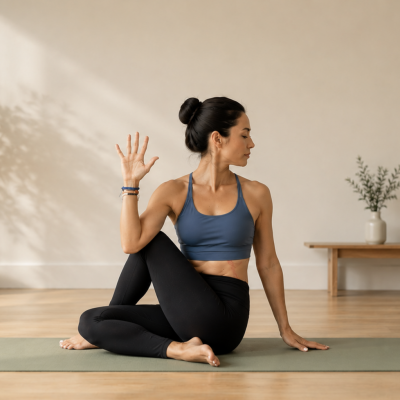
- With Gentle Yoga: Pair diaphragmatic breathing with restorative poses or slow stretching. In addition, coordinated breathing may improve body awareness during movement.
Common Mistakes to Avoid
- Forcing the Breath: A deeper breath is not always a better breath. Allow the breath to remain smooth and comfortable.
- Lifting the Shoulders: Try to keep the shoulders relaxed rather than pulling them upward with each inhalation.
- Breathing Too Quickly: Slow the pace if possible. However, never prolong the breath to the point of discomfort.
- Expecting Immediate Results: Breath awareness is a skill. Therefore, short and consistent practice may be more helpful than occasional, prolonged sessions.
When to Seek Professional Guidance
Breathing exercises are not a substitute for medical evaluation.
Seek medical care for:
- New or severe shortness of breath.
- Chest pain.
- Fainting.
- Blue lips or fingertips.
- Wheezing that is not improving.
- Symptoms associated with asthma, heart disease, or another medical condition.
People with respiratory, cardiovascular, or panic-related conditions may benefit from individualized guidance before starting a structured breathwork practice.
Moving Forward With Calm and Confidence
Overall, diaphragmatic breathing is a simple and accessible practice that may support relaxation, body awareness, and healthier breathing patterns.
Most importantly, the practice should feel gentle rather than forced. Begin with a few comfortable breaths and gradually build consistency.
Even a brief daily pause can become a meaningful part of a broader wellness routine.
Educational Disclaimer
This article is for general educational purposes only. It is not intended to diagnose, treat, cure, or prevent any medical condition. Consult a qualified healthcare professional regarding persistent breathing symptoms, significant anxiety, or concerns about your health.
Continue Your Wellness Journey
Ready to take the next step toward better breathing and overall wellness?
At ANIKO Lifestyle & Wellness, we offer personalized wellness consultations and evidence-informed yoga guidance designed to complement your healthcare plan.
You may also enjoy:
- Breathwork Basics for Inner Peace
- Gentle Yoga for Chronic Back Pain
Interested in working together?
Schedule a consultation to explore how mindful movement, breathing techniques, and lifestyle practices can support your wellness goals.
Bentley, T. G. K., D’Andrea-Penna, G., Rakic, M., Arce, N., LaFaille, M., Berman, R., Cooley, K., & Sprimont, P. (2023). Breathing practices for stress and anxiety reduction: Conceptual framework of implementation guidelines based on a systematic review of the published literature. Brain Sciences, 13(12), 1612. Link
Laborde, S., Allen, M. S., Borges, U., Dosseville, F., Hosang, T. J., Iskra, M., Mosley, E., Salvotti, C., Spolverato, L., Zammit, N., & Javelle, F. (2022). Effects of voluntary slow breathing on heart rate and heart rate variability: A systematic review and meta-analysis. Neuroscience & Biobehavioral Reviews, 138, 104711. Link
National Center for Complementary and Integrative Health. (2025). Relaxation techniques: What you need to know. U.S. Department of Health & Human Services.
National Center for Complementary and Integrative Health. (2025). Yoga: What you need to know. U.S. Department of Health & Human Services.
Burge, A. T., Gadowski, A. M., Jones, A., Romero, L., Smallwood, N. E., Ekström, M., Reinke, L. F., Saggu, R., Wijsenbeek, M., & Holland, A. E. (2024). Breathing techniques to reduce symptoms in people with serious respiratory illness: A systematic review. European Respiratory Review, 33(174). https://doi.org/10.1183/16000617.0012-2024